 |
| MI 35 HIND American Forces Press Service KABUL, Afghanistan, June 29, 2009 – After an absence of nearly a decade, the Afghan Mi-35 is again flying the skies of Afghanistan, thanks to pilots from the Afghan National Army Air Corps and the Czech Republic, military officials here said. On May 27, Afghan Mi-35 attack helicopters fired 12.7 mm rounds and 57 mm rockets near Bagram Air Base. Each partnered Afghan and Czech Republic crew fired 200 rounds of ball ammunition and 16 rockets while practicing gunnery on the East River Range Complex. The practice session was the culmination of more than a year’s work to rebuild the Mi-35 program, which gives the Afghan National Army dedicated, armed aircraft for the first time in eight years. The seven-hour training was supported by personnel and equipment from the ANAAC, the Czech Republic Operational Mentor and Liaison Team, Combined Security Transition Command - Afghanistan mentors and personnel from Task Force Thunder at Bagram Air Base. After the completion of the live-fire training, the lead pilot from the Czech team, Major Juracka, commented, “The Afghan shooting was perfect.” The Czech team began ground training and limited flight training for Afghan Mi-35 crewmembers last summer. In January, Afghan Mi-35 training increased greatly with the arrival of six refurbished helicopters. Since then, the Czech team has completed assessments on nine pilots and added a more aggressive training program. To date, the Afghan pilots have received training on pre-mission planning, contact maneuvers, emergency procedures, navigation, andpresidential escort operations. After the completion of their gunnery tables, the Afghan pilots will receive training on pre-planned and close air support combat missions. Future Mi-35 initiatives will put even more emphasis on independent Afghan training operations. The Afghan air corps is building its own arming points and is working on an initiative to complete all its Mi-35 live-fire training at Afghan facilities, while the Kabul MilitaryTraining Center is developing standardized Mi-35 live-fire training procedures. The air corps also is researching live-fire training locations throughout Afghanistan to better integrate the Mi-35 with the army. All of the efforts are aimed at decreasing the time for an Mi-35 training flight from seven to three hours, effectively doubling the amount of live-fire sorties that can be accomplished in a day. The Mi-35’s combat radius permits it to conduct combat operations anywhere in the country. The aircraft’s unique design allows it to be used in attack, air assault or medical evacuation roles. It can be configured with a 12.7 mm Gatling type machine gun, 57 mm rocket pods, and the AT-6 Spiral Anti-tank guided missile. The helicopters typically fly with 1,470 rounds of ball ammunition, 128 rockets and two anti-tank missiles. “The new capability is good for the Afghan National Army and for the country of Afghanistan,” Afghan Maj. Gen. Dawran, the air corps commander, said. (From a Combined Security Transition Command Afghanistan news release.) |

Wednesday, January 26, 2011
Afghanistan Air Corps MI 35 HInd Helicopter

ASIAN DEFENCE: Russia confirms Admiral Gorshkov delivery to India...


Russia will deliver the modernized Admiral Gorshkov aircraft carrier to the Indian Navy in 2012, a senior shipbuilding industry official has said.
"Under an agreement with India, the aircraft will be delivered in 2012. Almost 2,000 highly-qualified workers are currently involved in the overhaul [of the ship]," Vladimir Pakhomov, the president of Russia's United Shipbuilding Corporation, said in an interview published on Tuesday with the Vremya Novostei newspaper. "We willincrease the number of workers and speed up the work, making sure that it does not affect the quality. We are continuing talks with Indian officials about the additional financing of the project," he added. The original $750 million 2004 contract between Russia's state-run arms exporter Rosoboronexport and the Indian Navy envisioned that work on the aircraft carrier would be completed in 2008. However, Russia later claimed it had underestimated the scale and the cost of the modernization and demanded an additional $1.2 billion, which New Delhi said was "exorbitant. "After long-running delays and disputes, Russia and India agreed in February 2008 to raise retrofit costs for the aircraft carrier, docked at the Sevmash shipyard in northern Russia for the past 12 years, by at least $800 million.The current contract covers a complete overhaul of the ship and equipping it with modern weaponry, including MiG-29K Fulcrum aircraft and Ka-27 Helix-A and Ka-31 Helix-B anti-submarine helicopters.
The Admiral Gorshkov carrier, renamed the Vikramaditya, is to replace India's INS Viraat carrier, which, although currently operational, is now 50 years old. After modernization, the carrier is expected to be seaworthy for 30 years.


Tuesday, January 25, 2011
Exploding rocks..... Kabul style
 |
| Me getting ready to blow up a rock in Kabul 2004 |
 |
| Fun times... The US Marine if on the far right the Canadians of the Battle group are in Green and the Embedded Training Team members are in CADPAT arid... |
Super Hornet in digital camo
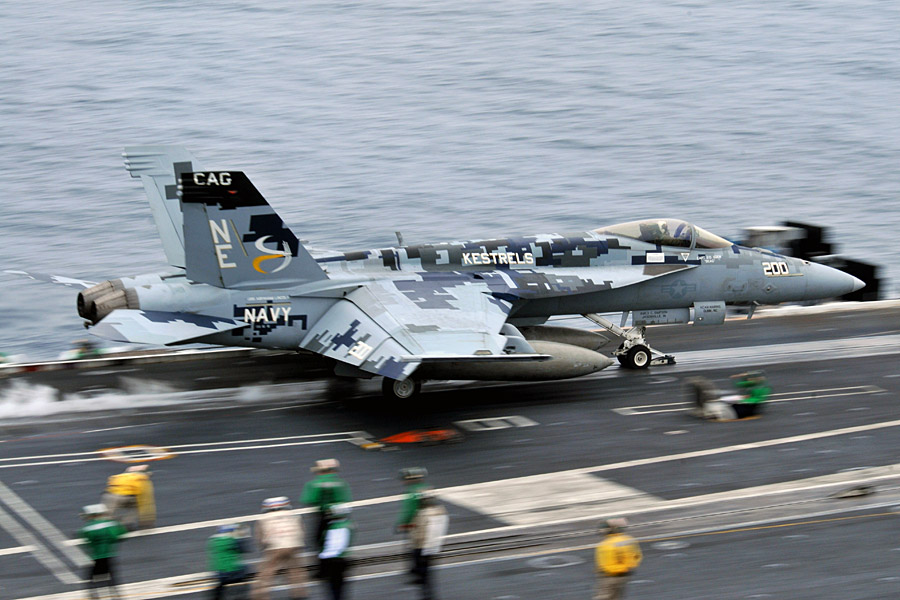   |
 |
| This is a model but shows the paint scheme well... (wow) |
 |
| Marine Corp Black Knight Squadron F/A 18C |
Here is a neat article that is directed at the Japanese and Canadian market.....

Boeing to offer F-35-like cockpit display for Super Hornet
Boeing plans to offer an F/A-18E/F Super Hornet with large-area cockpit displays similar to the Lockheed Martin F-35 Joint Strike Fighter as the company pursues new foreign sales from Canada to Japan.
The cockpit upgrade for the Super Hornet is intended to equalise one of the perceived advantages offered by the F-35's multifunction, touchscreen display, which measures 8 x 20in (20 x 51cm).
Boeing has evaluated a display with the same dimensions as the F-35, but found that pilots have preferred a larger 11 x 19in screen, says F/A-18E/F programme manager Mike Gibbons. The single display can be configured to digitally mimic the Super Hornet's existing cockpit layout, or allow pilots to overlay data from several sources on to a single screen, Gibbons says. The displays can be integrated into both seats for the F/A-18F.
The technology remains in developmental form, but can be integrated in time to meet the timelines for any future sales in foreign markets, he says. Boeing is evaluating bids from undisclosed suppliers to manufacture the displays. The US Navy, however, has already rejected Boeing's overtures to retrofit the display on its fleet. Although Boeing believes the upgrade would reduce lifecycle maintenance costs, the service does not want to operate two different display technologies at the same time, Gibbons says.
The new cockpit display made its public debut at the Navy League exhibit hall in early May. Boeing also showed off the new technology in Ottawa in early June at the CANSEC conference and exhibition.
Boeing plans to offer the F/A-18E/F for Canada's requirement to replace its ageing CF-18 fleet later this decade. Canada has invested $150 million to participate in the F-35 development programme, but plans to stage a competition for the procurement contract. Meanwhile, Boeing is also offering the Super Hornet to buyers in Brazil, Denmark, India, Japan and Kuwait. The F/A-18E/F's first international buyer, Australia, has no plans to order the upgraded cockpit, having already received the first five of its 24 two-seat aircraft.
http://www.flightglobal.com/articles/2010/06/07/342845/boeing-to-offer-f-35-like-cockpit-display-for-super.html
Subscribe to:
Posts (Atom)