Welcome to PaulFranklin.ca
The official website of Paul Franklin: a father, veteran, activist, motivational speaker, and proud Canadian.

Saturday, May 21, 2011

Airborne medics save life and limb from chopper over Afghanistan's war zone

Airborne medics save life and limb from chopper over Afghanistan's war zone
"Do you know what a soldier is? He's the chap that makes it possible for civilised people to despise war" - Allan Massie
KANDAHAR, Afghanistan — The distressed cries of the little girl are obvious in any language: "Daddy, daddy, it hurts."
Her eyes speak pain, fear and confusion, even if her words are drowned out by the pulsing scream of the helicopter turbines.
Her father, clutching a stuffed animal in his left hand, reaches over and puts his right hand on her bare chest, soothing her as he gently admonishes her to be quiet.
The girl, just seven years old, is on her way to hospital via an American medevac chopper from Kandahar city, where she had been shot in the back during insurgent unrest.
The bullet tore her through her slender frame, exiting her abdomen and lodging in her arm.
U.S. Staff Sgt. Rob Marchetti places an oversized pair of headphones over her ears to quiet the noise of the chopper and allow the calm chatter of the crew to comfort her.
Medics in action
He puts an oxygen mask over her mouth, hooks her to a monitor, and keeps a close eye on her stable vital signs for the 15-minute flight to the hospital on an Afghan army base.
"Some days you help people — you get that opportunity — and some days you don't," Marchetti says.
"When you have good days where you get to help people and everybody goes home safe ... you hold on to that, because it doesn't always happen."
The little girl's rescue turned out to be an easy call for Charlie Company of 1st Battalion, 52nd Aviation Regiment, based at Kandahar Airfield, where on-call crews wait for the radio announcement that will send them scrambling:
"Medevac! Medevac! Medevac!"
With those three words, the ever-present hurry-up-and-wait routine — time that's usually passed by watching war movies or comedy schlock — gives way to an urgent new reality of flesh, bone and blood.
From somewhere in the war zone, a desperate plea for help has been made. Life itself hangs in the balance.
Soon, a medic will be performing life-saving measures for a dizzying array of grisly injuries: amputations, bullet and shrapnel wounds, crushed skulls.
"You have to be an idiot," Staff Sgt. Stephon Flynn, another medic, says only half-jokingly about the key job attribute.
"You see stuff no human being should have to look at."
If you're going to get blown up or shot in the combat zone, as has been the case for hundreds of Canadians in Afghanistan, these are definitely among the folk you most want to see first, and in a hurry.
Armed with the minimum information — where exactly is the casualty, how bad is it, and is fighting raging in the area — the two pilots, the crew chief and the medic scramble across the tarmac to their waiting chopper.
For "Cat A" injuries, the classification reserved for the most severe of cases, the maximum allowable time for the team to get airborne is 15 minutes. These guys can do it in as little as eight minutes.
Their Black Hawk helicopters — one, unarmed, to carry the passengers, the other an armed escort — scream over the Kandahar desert, homes or farm fields in search of the point of injury.
The casualty might be a Canadian, American or other NATO soldier. It could be an Afghan soldier or civilian. The team reacts the same way every time.
The pilot swoops in and lands, occasionally taking enemy fire, and the casualty or casualties are stretchered on board. Then it's off again on a mad dash to hospital.
As crucial seconds and minutes tick away, the medics do whatever they need to stabilize the patient.
They thread needles into veins even as the chopper bucks and swerves, and offer IV fluids and pain medication. They open chests to deal with collapsed lungs or punch holes in the trachea to keep the patient breathing.
It's often delicate work, conducted in a tiny space the size of a small elevator that bucks and dips like a roller coaster. One misstep, and you're standing on a patient's head or mangled leg.
"It's hard to do that back there," Flynn says. "You learn the balance and you learn to hold on at all times."
The calm competence of the medics is a studied contrast with the mangled, jarring and disoriented pain of the wounded.
An Afghan man raises his dusty, blood-streaked head and reaches tentatively for his hastily bandaged right foot — the one that's just been shredded by a landmine.
His parched mouth is twisted in a grimace as he surveys unfamiliar surroundings with his one open eye.
Capt. Jordan Yokley offers a thumb's up, gently lies him back down and places a comforting hand on his shoulder.
Marchetti pours gratefully accepted sips of water into his mouth while the intravenous pain medication eases his racing heart rate. His hand grasps Yokley's calf.
Alongside him, another man, his head peppered with shrapnel wounds from the blast, looks to be sleeping peacefully as Marchetti slices through his clothes and hooks him to a monitor.
Bushra Saeed, a Canadian diplomat who was horribly maimed in an IED strike in December 2009, says she barely remembers her medevac flight, which seemed to her to be over in mere seconds, nor the medics who helped keep her alive.
"I remember looking at the top of the helicopter, then looking out the window and seeing beautiful mountains and beautiful sky and thinking it was so odd to have such beautiful scenery and such horrible incidents take place."
The medics say they force themselves to detach from the ugly reality of their patients, both while working and when lying in the quiet of their beds.
"It doesn't do me any good to second-guess myself or worry about that guy," Flynn says. "Letting him into my thoughts at night is not doing me any good."
Soon, the casualties are delivered into the care of a hospital trauma team.
Still, Marchetti says, the medics are constantly thinking about what's been done and how to do it better the next time.
"Any medic that tells you any different is lying," he says. "There's always stuff you think about, and it never goes away."
The crew touches down again briefly to fuel up the chopper, and heads back to base, where the wait begins all over again. The medics wouldn't have it any other way.
"Us sitting around doing nothing is a very good thing," Flynn says.
"Experience comes at a cost here."

Achilles has entered my life my new wingman


Its funny how I have always wanted a dog and this little Basset Hound puppy entered my life just over 2 weeks ago.  I have to say I'm not sure who gets more out of our friendship him or me.

He was born on Jan 28, 2011 and is proving to be a challenge and a huge part of my life.

he is a bit of a helper dog and I challenged some friends to come up with some cool names for him.
Helper dog, companion dog, guide dog but the one that seems most appropriate is "wingman" 

Also his name is Achilles as in the Greek demi god.

Monday, May 16, 2011

4 soldiers hurt in Afghanistan helicopter accident

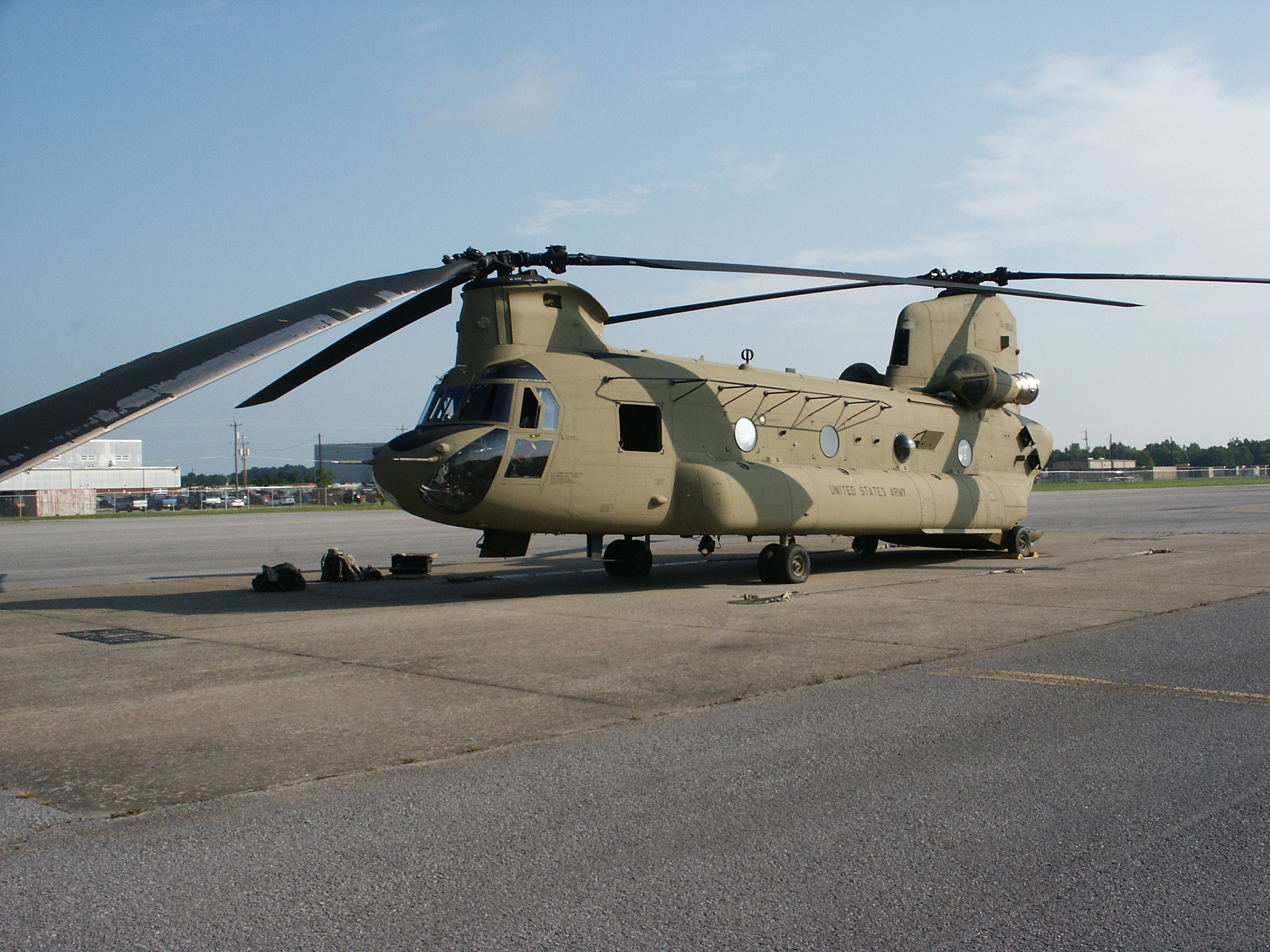
Canada has been very lucky with the used CH-147D  Chinook helicopters it received from the US military in 2009 for the bargain price of $282 million.  These airframes are quite old and it was unlikely that there would be buyers for them once the mission ends.   The reason Canada is selling these versatile aircraft is that they have already purchased newer version in the amount of 15 of the CH-147F version.
Canadian Chinooks bought used off the US Marines in 2009
The number for 15 new chinooks is $1.2 billion the 20 year service and support contract is $2.2 billion and will provide approximately 5,500 jobs and an opportunity for up to 15,000 indirect jobs for Canadians across the country.
Originally there were 6 aircraft but now that number falls to four as the one to replace the bird that was shot down in August 2010 was a leased aircraft.  

Canadian soldiers gather near a burning Canadian Forces CH-147 Chinook helicopter after it made a hard landing close to the village of Bazaar e Panjway, in the Panjway district west of Kandahar on 5 August 2010.
Canadian soldiers gather near a burning Canadian Forces CH-147 Chinook helicopter after it made a hard landing close to the village of Bazaar e Panjway, in the Panjway district west of Kandahar on 5 August 2010

KANDAHAR, Afghanistan — Four Canadian soldiers were injured when a helicopter "rolled" Monday during a "hard landing" on a riverbed in Afghanistan.


At risk: A Chinook helicopter, like those above, was brought down by a missile in May 2007
Chinooks are very good aircraft and with the high altitude and very austere conditions in Afghanistan they have saved many lives.
The Canadian CH-47 Chinook transport chopper accident occurred during night operations by the Quebec-based Royal 22nd Regiment in the Horn of Panjwaii. Insurgents were not blamed in the incident.


None of the injuries were considered serious or life threatening at this time, said Maj. David Devenney, the Task Force Kandahar spokesman. Among several dozen passengers was a Canadian journalist who was uninjured.


Three of the wounded were flown by another helicopter to the U.S. Navy-run Role 3 Hospital at Kandahar Airfield. Canadian and other coalition forces secured the crash site.

"I am extremely happy everybody is in good shape," said Brig.-Gen. Dean Milner, the Canadian commander. "The casualties were very minor. They'll be looked at over the next few days."
Canadian troops stand beneath a Chinook Ch-47 helicopter in Afghanistan in a 2010 file photo. Four Canadian soldiers were injured when their helicopter crashed upon landing on a river bed in Afghanistan.

Canadian troops stand beneath a Chinook Ch-47 helicopter in Afghanistan in a 2010 file photo. Four Canadian soldiers were injured when their helicopter crashed upon landing on a river bed in Afghanistan.

Photograph by: Sgt Daren Kraus, DND


"It was a standard operation," Milner explained. "We move Chinooks through that battle space all the time and are very deliberate about where we land. We landed on a piece of turf in a riverbed that is fairly straight. But that little piece wasn't and the wheels went cockeyed. As a result, the helicopter rolled, the blades broke, and it finished the roll ending up on its side."

Devenney said that an assessment was being conducted to decide whether the aircraft was salvageable. Initial reports suggested that it had been heavily damaged.


Milner said that the damaged helicopter would have no impact on military operations.

"There will be no loss of operational tempo as we close in on the fighting season which is about to begin because the poppy harvest is almost over," he said.


Monday's accident was the third involving a Canadian helicopter in Afghanistan. Another Chinook was hit by insurgent gunfire and burned after being forced to make a hard landing on Aug. 5, 2010.  Eight soldiers were wounded in the crash.
Canadian soldiers from the NATO-led coalition sit in a CH 147 Chinook helicopter before take off over a neighbourhood in Kandahar province, southern Afghanistan, March 27, 2009. Helicopters are a prime asset to move NATO-led coalition troops and supplies in the war-plagued country because convoys by road are often blown up improvised explosive devises (IEDS).

Thirteen months earlier a smaller Canadian CH-146 Griffon helicopter crashed on takeoff in neighbouring Zabul province. Three on board died and three others were injured.

Those who died were: Master Cpl. Pat Audet, 38, of Montreal, and Cpl. Martin Joannette, 25, of St-Calixte, Que., and a British officer.


The interior of a Canadian Forces chopper is shown on its side after it crashed on landing in the Panjwaii district of southern Afghanistan early Monday.
Interior of crashed Chinook
Another Canadian, military photographer Master Cpl. Darrell Jason Priede, was killed in 2007 when the U.S. Chinook helicopter that he was flying in was apparently shot down in Helmand province. Six other coalition soldiers died in that crash.


Helicopters are one of the main ways to get around southern Afghanistan's rugged terrain. When available they are often the preferred means of transport because the Taliban often mine the roads with homemade explosives.


Canada acquired a small fleet of Chinooks from the U.S. army after the Manley Panel on Afghanistan recommended to Parliament that helicopters were urgently needed to help troops off Kandahar's dangerous roads.


A Canadian helicopter sits on its side after it crashed on landing in the Panjwaii district of Afghanistan on Monday. Four Canadian soldiers were injured, one of them seriously, in the incident.
(Colin Perkel/Canadian Press
)

Canada sold its Canadian Chinooks to the Dutch and here is one carrying a Dutch F16.


Sunday, May 8, 2011

Russian 5th generation stealth helicopter?

KA 50 (notice the rounded body compared to the KA 58 representations that show angled stealth designs)

KA 50 (compared to the old but very reliable Mi24 (Hind) Gunship)


KA 52 Alligator (has small mid-mounted wings, fitted with four underwing suspension units and wingtip countermeasures pods)
Kamov Ka-52 "Alligator"
KA 52 Alligator (52 refers to twin aircrew version of the Alligator)


Kamov Ka-58 Stealth helicopter
KA 58 Stealth?
The Russian military have been developing the twin counter rotating Kamov Ka 50, then the KA 52 and now on the drawing board is the stealth version the KA 58.  Notice in the actual aircraft and the representations on how the design is developing from a a single person attack helicopter to a twin air crew stealth aircraft.

Stealth Blackhawk (Silent hawk) in pictures...


When compared to recent revelations of Chinese Stealth technologies it should be of no surprise that the American military was capable of creating a stealth Blackhawk.
 Of course the real shock is that they have been able to kept it secret.
Silent hawk? (from the Sun)

The Chinese have had rapid development in Stealth technology with the revelation of two working test beds of their new Stealth Fighter earlier this year.
J20 with variable fins and stealth technology

They have also developed a helicopter that incorporates some stealth technologies from shaped airframes to radar limiting coverings and paint.  Compare the Chinese designs on airframes in service to the Blackhawk drawings and the wreckage.
Chinese Attack helicopter WZ 10 (operational in 2010) 
WZ 10 with radar avoiding features


Well, now we know why all of us had trouble ID'ing the helicopter that crashed, or was brought down, in the Osama raid.


blog post photo
tail rotor recovered in Abbottababd raid

It was a secretly developed stealth helicopter, probably a highly modified version of an H-60 Blackhawk. Photos published in the Daily Mail and on the Secret Projects board show that the helicopter's tail features stealth-configured shapes on the boom and tip fairings, swept stabilizers and a "dishpan" cover over a non-standard five-or-six-blade tail rotor. It has a silver-loaded infra-red suppression finish similar to that seen on some V-22s. 
CGI of Potential Helicopter used in Operation against Osama bin Ladin
A graphic of a so called Silent hawk
No wonder the team tried to destroy it. The photos show that they did a thorough job - except for the end of the tailboom, which ended up outside the compound wall. (It almost looks as if the helo's tail hit the wall on landing.)


http://www.aviationgraphic.com/sparta/


Aviation Graphic's version of the Stealth Blackhawk compared to a typical Special Forces helicopter

Stealth helicopter technology in itself is not new and was applied extensively to the RAH-66 Comanche. Priorities are usually different versus fixed-wing aircraft. Reducing noise and making it less conspicuous is the first job (more main and tail blades reduce the classic whop-whop signature). 
Listen here. 

Noise can also be reduced by aerodynamic modifications and flight control changes that make it possible to slow the rotor down, particularly in forward flight below maximum speed. Infra-red reduction measures are crucial -- the Comanche had an elaborate system of exhaust ducts and fresh-air mixers in its
tailboom.


blog post photo
Comanche cancelled in 2004 (stealth gunship)
Radar cross-section reduction is also possible - you can't make a helo as radar-stealthy as a fixed-wing airplane, because of all its moving parts, but on the other hand it is generally operating at low altitude in ground clutter, and is not an easy target. Reducing RCS also makes jamming more effective, whether from the aircraft itself or from a standoff jammer.

The willingness to compromise this technology shows the importance of the mission in the eyes of US commanders -- and what we're seeing here also explains why Pakistani defenses didn't see the first wave (at least) coming in.

Why Osama is dead (graphic image)

Subtle caption from the New York rag....

Osama bin Laden was killed by US Navy SEALs in a daring raid in the dark of night in the military town of Abbottabad on the night of 1 May 2011 (the same day that Hitler killed himself in 1945).  Without releasing pictures of OBL body the conspiracy files have ramped up saying that OBL is really alive and/ or was actually a CIA agent.... or that he died in December 2001. 
There are some ways to verify the events without looking at any OBL pics.  His eldest son was allegedly killed in the raid and the body show below showcases very similar familiar traits.

Look at the thin frame of OBL.
Long nose.
Thin but long eye brows.
Prominent lips.

Two images that showcase Osama bin Laden face and slight thin frame
Younger Osama bin Laden for comparrsion


 Now the picture shown below has very similar traits.


Cropped and enlarged picture of eldest bin Laden son in Abbottabad?
Long nose.
Thin but long eye brows.
Prominent lips.
One can't confirm identity just using pictures but it defiantly showcases a very similar facial features.
Now could this be called proof?


Body of alleged Osama bin Laden's son in Abbottabad (original photo)


Omar bin Laden (note the long nose and thin eye brows)

Sunday, May 1, 2011

Congrats the witch is dead.


I’ve never wished a man dead, but I have read some obituaries with great pleasure.
Mark Twain
Before today this was only the word... Osama is dead or alive
Now we know he is dead... congrats